
Writen by
atmandave.6363@gmail.com
What Is Website Design and Why Does It Matter?
Website design encompasses every visual and functional element you encounter on a webpage: the layout, the colours palette, the typography, the navigation structure, the imagery, the loading speed, and the way all these elements work together to guide a user toward a goal. A well-designed website communicates trust, professionalism, and value within the first three seconds of a visitor landing on it.
Whether you are a startup launching your first product or an established enterprise looking to refresh your digital identity, investing in high-quality website design is one of the highest-ROI decisions you can make for your business.
Core Elements of Effective Website Design
A successful website is built on a foundation of several interconnected design elements. Understanding each one helps you communicate clearly with your design team and make smarter decisions about your digital presence.
| Element | Description | |
|---|---|---|
| [ ] | Layout & Structure | How content is arranged on the page — clear hierarchy guides users naturally toward action. |
| T | Typography | Font choices, sizes, and spacing shape readability and define your brand personality. |
| O | Colour Psychology | Colours evoke emotion, reinforce brand identity, and direct user attention strategically. |
| ^ | Visual Hierarchy | Size, contrast, and placement communicate what matters most on any given page. |
| -> | Call to Action | Strategic CTA placement drives conversions — purchases, enquiries, or signups. |
| >> | Performance & Speed | Fast-loading pages reduce bounce rates and directly improve your search rankings. |
Types of Website Design Approaches
Not all websites are built the same way. Depending on your business goals, budget, and technical needs, different design approaches offer different advantages.
Static Website Design
Static websites are built with fixed HTML and CSS files. They are fast, secure, and ideal for businesses that need a simple online presence — think portfolio sites, landing pages, and brochure websites. They require little to no maintenance and are very cost-effective.
Dynamic Website Design
Dynamic websites pull content from a database and display it differently depending on who is visiting. E-commerce platforms, news portals, and membership sites all rely on dynamic design. Technologies like PHP, Python, Node.js, and databases like MySQL power these experiences.
CMS-Based Website Design
Content Management Systems like WordPress, Joomla, and Drupal allow non-technical users to manage and update website content easily. WordPress alone powers over 40% of all websites on the internet. A CMS-based approach combines design flexibility with easy content management.
Custom Web Application Design
For businesses with complex workflows or unique user journeys, custom web applications offer the most flexibility. Built on frameworks like React, Angular, or Vue.js, these applications deliver sophisticated interactivity tailored precisely to your business logic.
User Experience (UX) — The Heart of Great Design
User Experience design is the practice of creating products that provide meaningful and relevant experiences to users. It involves the design of the entire process of acquiring and integrating the product, including aspects of branding, design, usability, and function.
A website with poor UX will drive visitors away, even if it looks visually stunning. Conversely, a simple, clean, and intuitive website will keep users engaged, increase time-on-site, and dramatically improve conversion rates. Key UX principles include clarity of navigation, fast load times, accessible design, and clear communication of value.
User testing, heat maps, and analytics data all play a crucial role in refining UX over time. The best website designers treat a site launch not as the finish line but as the starting point of a cycle of continuous improvement driven by real user behavior.
How Website Design Impacts SEO
Search Engine Optimization and website design are deeply intertwined. Google’s ranking algorithms consider dozens of design-related factors when deciding where to place your website in search results. Ignoring design in your SEO strategy means leaving significant organic traffic on the table.
Page speed is one of the most critical design-related SEO factors. Google uses Core Web Vitals — a set of metrics measuring loading performance, interactivity, and visual stability — as direct ranking signals. A slow website not only frustrates users but also ranks lower in search results.
Clean HTML structure, proper use of heading tags (H1, H2, H3), image alt text, schema markup, and internal linking all originate in the design and development phase. Getting these right from the start ensures your website is built on a solid SEO foundation, reducing costly retrofitting later.
Mobile-First Design: Why It’s Non-Negotiable
More than 60% of global web traffic now comes from mobile devices. Google has adopted mobile-first indexing, meaning it primarily uses the mobile version of your site for ranking and indexing. If your website is not optimized for mobile, you are not just delivering a poor user experience — you are actively harming your search visibility.
Mobile-first design means designing the mobile experience before scaling up to desktop, rather than the traditional approach of designing for desktop and then squeezing it into a smaller screen. This philosophy forces designers to prioritize content and features, resulting in cleaner, faster, and more focused experiences across all devices.
The Website Design Process: Step by Step
Understanding the design process helps you collaborate more effectively with your design partner and set realistic expectations for timelines and deliverables.
Step 1 — Discovery & Strategy
The process begins with a deep dive into your business: your goals, your target audience, your competitors, and your brand identity. This phase produces a clear creative brief and project roadmap that aligns all stakeholders before a single design is created.
Step 2 — Wireframing & Prototyping
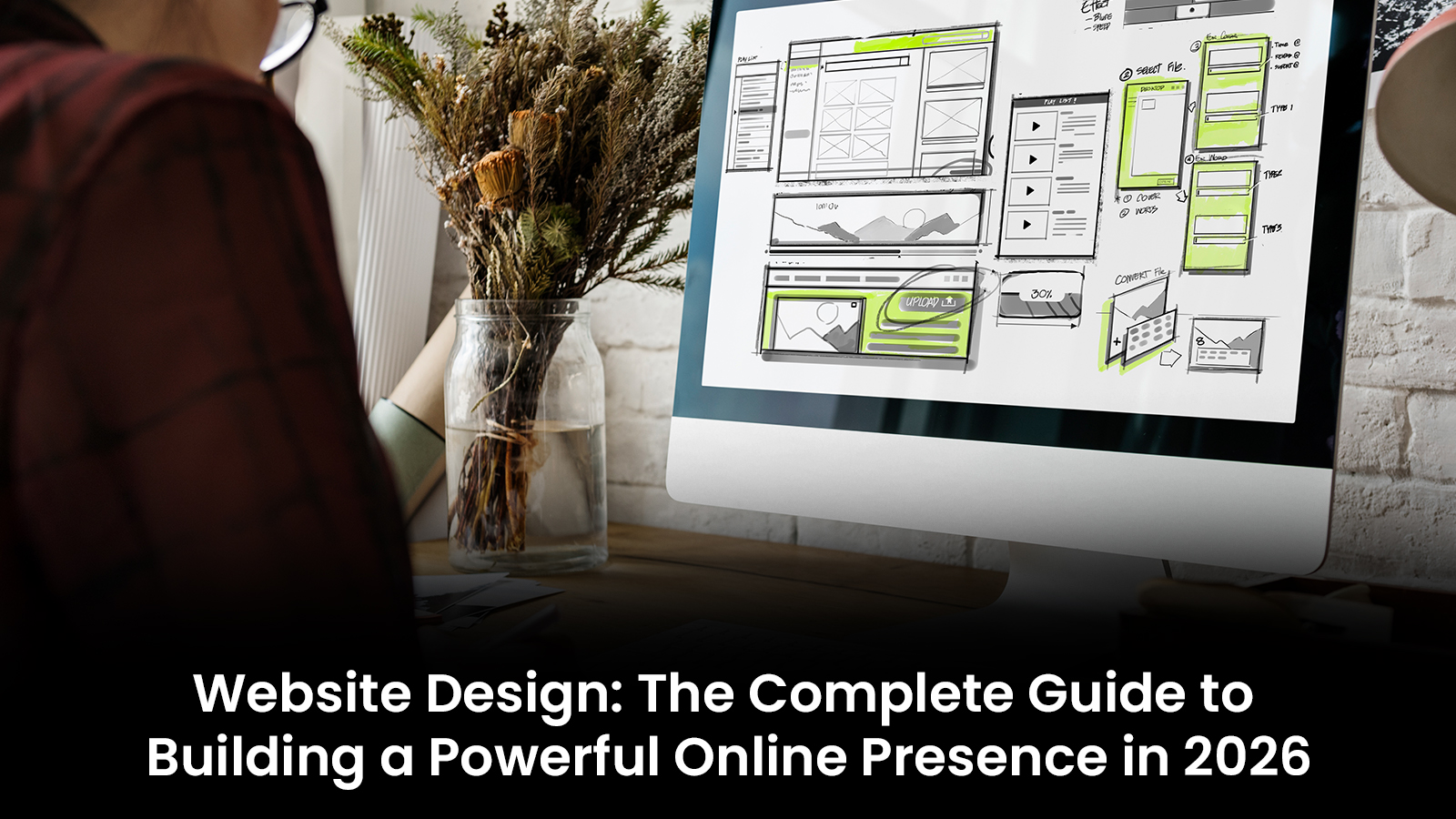
Wireframes are low-fidelity blueprints that map out the structure and layout of each page without visual design elements. They allow rapid iteration of ideas before investing time in full design. Interactive prototypes take wireframes further, simulating the user journey.
Step 3 — Visual Design
With the structure approved, designers apply visual elements: colours palettes, typography, imagery, icons, and animations. High-fidelity mockups are created and reviewed by the client for feedback before development begins.
Step 4 — Development & Testing
Developers bring the design to life, coding the front-end and back-end functionality. Rigorous testing across devices, browsers, and screen sizes ensures a consistent, bug-free experience before launch.
Step 5 — Launch & Ongoing Support
Once approved, the website goes live. A good design partner does not disappear after launch — they monitor performance, provide security updates, and make continuous improvements based on analytics and user feedback.
Website Design Trends in 2026
The web design landscape evolves rapidly. Staying current with design trends helps your website feel modern and relevant, while being mindful of which trends serve your audience versus those that merely follow fashion.
AI-powered personalization is transforming how websites interact with visitors. Websites now adapt content, layouts, and product recommendations in real time based on user behavior and preferences. Scroll-triggered animations add depth and storytelling to the user journey without compromising load times.
Minimalism continues to dominate, with generous white space, clean typography, and purposeful imagery replacing cluttered, information-heavy layouts of the past. Accessibility has moved from a compliance requirement to a competitive advantage. Websites designed for users with disabilities tend to perform better in search and deliver stronger overall user experiences.
Dark mode compatibility, voice search optimization, and micro-interactions are all shaping the next generation of website design.
How to Choose the Right Website Design Partner
Choosing a website design agency is one of the most important business decisions you will make. The right partner becomes a long-term digital growth collaborator; the wrong one can cost you time, money, and missed opportunities.
Look for a portfolio that demonstrates range, creativity, and real results — not just beautiful visuals. Ask about their process, their communication style, and how they handle post-launch support. Verify their technical credentials: can they handle SEO, security, performance optimization, and CMS training?
A full-service partner like Envision Solutions eliminates the complexity of managing multiple vendors by bringing design, development, digital marketing, and ongoing support under one roof. Key factors to evaluate when choosing your partner include:
- Portfolio quality and industry experience
- Transparency in process and pricing
- Post-launch support and maintenance plans
- Non-Disclosure Agreement (NDA) to protect your ideas
- Real-time project tracking and communication
- Client references and measurable case studies
Frequently Asked Questions (FAQ)
Here are answers to the questions we hear most often from businesses exploring website design for the first time or upgrading an existing site.
Q1: How much does professional website design cost?
A: The cost varies significantly based on complexity and features. A basic informational website can start from Rs.15,000-50,000, while a feature-rich e-commerce platform or custom web application can range from Rs.1,00,000 to Rs.5,00,000 or more. At Envision Solutions, we offer flexible payment plans and transparent pricing tailored to your specific business goals and budget.
Q2: How long does it take to design and launch a website?
A: A standard informational website typically takes 2-4 weeks from briefing to launch. A more complex website with custom design and integrated functionality can take 6-12 weeks. Timelines depend on how quickly feedback and approvals are provided. Envision Solutions uses real-time project tracking so you always know exactly where your project stands.
Q3: What is the difference between website design and web development?
A: Website design refers to the visual and experiential aspects — how the site looks and feels. Web development refers to the technical construction — the code that makes it function. Good websites require both. Envision Solutions offers both services together to ensure seamless integration between form and function.
Q4: Will my website be mobile-friendly and SEO-optimized?
A: Absolutely. Every website we build is fully responsive — adapting beautifully to all screen sizes — and is built with on-page SEO best practices from the start. This includes optimized page speed, clean code structure, proper heading tags, image optimization, and schema markup to give your site the best possible foundation for ranking on Google.
Q5: Can I update my website content myself after it launches?
A: Yes. We build most websites on user-friendly CMS platforms such as WordPress, which allow you to update text, images, blog posts, and products without any coding knowledge. We also provide training and documentation so your team feels confident managing the site independently.
